lexapro side effects in children lexapro side effects antibiotic without prescription amoxicillin prescription no insurance symbicort inhaler generic symbicort inhaler dosage buy sertraline canada buy sertraline 100mg symbicort inhaler steroid symbicort inhaler dosage buy amoxicillin from canada amoxicillin without prescription nifedipine grossesse acheter nifedipine free abortion pill Philippines abortion pill philippines abortion pill cost Philippines abortion pill philippines how much is the abortion pill Ph abortion pill over the counter ph redirect abortion pill online philippines buy ventolin inhaler over the counter buy ventolin inhaler india abortion pill online buy mifeprex abortion pill online read here where can i buy the abortion pill online buy albuterol sulfate inhaler online buy ventolin online buy amoxicillin canada antibiotic without prescription blog.pleasetech.com amoxicillin prescription no insurance buy naltrexone canada buy naltrexone canada etia.cz buy amoxicillin canada antibiotic without insurance buy amoxicillin without prescription antibiotic without insurance open amoxicillin prescription no insurance amoxicillin price without insurance naltrexone weight loss pill contrave weight loss pills reviews bitdebris.com planned parenthood abortion pill abortion pill buy venlafaxine online without prescription buy venlafaxine stephansweb.de abortion pill usa legal buy abortion pill online usa name of abortion pill in u abortion pill online usa buy naltrexone online buy low dose naltrexone canada read here buy naltrexone canada naltrexone where to buy redirect am i pregnant quiz nhs am i pregnant quiz nhs click where to buy low dose naltrexone buy naltrexone buy duloxetine where can i buy duloxetine website prescription drugs discount cards free discount prescription cards read here weed melatonin levels melatonin and weed before bed kiteason.com how to buy abortion pill online can i buy the abortion pill online how long does the medical abortion pill take to work how long does it take the abortion pill to work jaysmith.us 15mg mirtazapine buy mirtazapine go am i pregnant quiz early signs am i pregnant quiz abortion pill over the counter what is the over the counter abortion pill called news.noerskov.dk first trimester surgical abortion abortion during first trimester abortion pill where can i buy it buy abortion pill lamictal pregnancy registry lamictal and pregnancy mayo clinic dogancoruh.com venlafaxine and alcohol death venlafaxine alcohol overdose online what happens after an abortion buy abortion pill over the counter albuterol inhaler albuterol otc lexapro pregnancy reviews lexapro and pregnancy first trimester albuterol otc albuterol otc alternative anvly.com mixing weed and adderall mixing weed and adderall movidafm.net acquistare cialis con paypal cialis pillola redirect lamictal pregnancy lamictal and pregnancy mayo clinic amlodipin krka amlodipin 5 mg gabapentin pregnancy review gabapentin pregnancy test augmentin bambini augmentin generico prezzo xanax weed and caffeine xanax and weed for opiate withdrawal go gabapentin pregnancy risk gabapentin and early pregnancy buy abortion pill online usa abortion pill online pharmacy uk areta.se naltrexone reviews australia naltrexone reviews webmd femchoice.org sertraline 50 mg sertraline alcohol memory loss redirect naltrexone reviews for opiate addiction naltrexone oral reviews redirect sertraline reviews sertraline and alcohol legal abortion weeks where can i get the abortion pill prozac alcohol craving prozac and alcohol death cialis discount coupons online prescription card discount sigridw.com naltrexone naloxone potency is naltrexone and naloxone the same thing read here buy levitra discount levitra prescription coupons click atomoxetin gehirndoping atomoxetin virkning "The old Indian teaching was that it is wrong to tear loose from its place on the earth anything that may be growing there. It may be cut off, but it should not be uprooted. The trees and the grass have spirits. Whatever one of such growths may be destroyed by some good indian, his act is done in sadness and with a prayer for forgiveness because of his necessities." Cheyenne
A little DBN soil history, according to the Ohio Division of Forestry, our land was cleared in the late 1800’s for farming. By around 1920 the farmer figured out that the steep slopes and high clay soils were not that good for agricultural purposes and they abandoned farming. In the 1950’s several species of pines and spruces were planted by previous owners, the Rogers' family, aka, Old Doc Rogers a local dentist. Various Ohio hardwoods also started natural reforestation. In the mid-1990’s Grant and Nancy Kittle (previous property owners) started raising buffalo and cleared most of a 5-acre field in the middle of the South-side of the property. In 1999, we reluctantly took down the remaining 75 trees to create our future organic agriculture site.
You know the old joke that goes like, "Our soil is so bad" and the audience responds, "How bad is it?", well Diana went to the field to prepare the samples for soil testing, she started with a shovel, moved to a pick and we ended up using a post-hole auger on the tractor--just to get soil samples! The results weren’t any better. The lab said that they had never seen soil so bad. We really have our work cut out for us. We consulted with the Soil and Water Conservation Division of the Agricultural Extension Office on reducing erosion and rebuilding our soil.
The Nez Perce Indians say: "the earth and myself are of one mind. The measure of the land and the measure of our bodies are the same." Given the state of our soil, we had to embark on some natural remedies. So, in 1999 we began the first of our "green manure" cover crops—winter wheat. Since that time we have planted oats, clover and timothy hay. We are also collecting just about any source of organic matter we can get our hands on--horse, llama and, chicken manure, saw dust, wood chips, compost, etc.—to try to improve the soil.
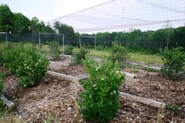
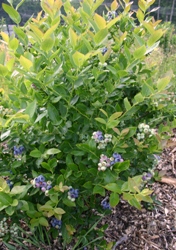
In 2000 we planted a whole host of berry bushes, as well as fruit and nut trees to see what would work best. With the help of a backhoe, yes a backhoe, and our family’s strong backs we mixed lime, manure, straw and peat in holes about 2-3 feet in diameter. We planted 10 blueberries, 10 cranberries, 60 red raspberries of various types, pear, apple, cherry, and peach trees, persimmons and hazel nut trees.
By fall, when we had hoped to be harvesting, we found that the:
- deer had browsed or rubbed all but a few of the other fruit trees to death
- nut trees became overgrown with weed and grass
- raspberries we purchased just died, although the ones we transplanted from family stock looked strong
- cranberries were barely hanging on
- blueberries did pretty well, until the deer ate all the new buds
- everything needed water, except the peach trees which were at the bottom of a slope, in heavy clay soil, and drowned.
So what have we learned..., like Stephen Covey says, "first things first" or work on those things that are important but not urgent.
- Fencing comes first. In our area the white tailed deer are abundant. The farmers think we are crazy to try to keep them out with anything other than a shotgun. In 2002, we began testing a two-fence system we saw at Crown Point Ecological Learning Center in Akron. They had two, five-foot fences about five feet apart.
|